Aircraft
Aircraft
Filters
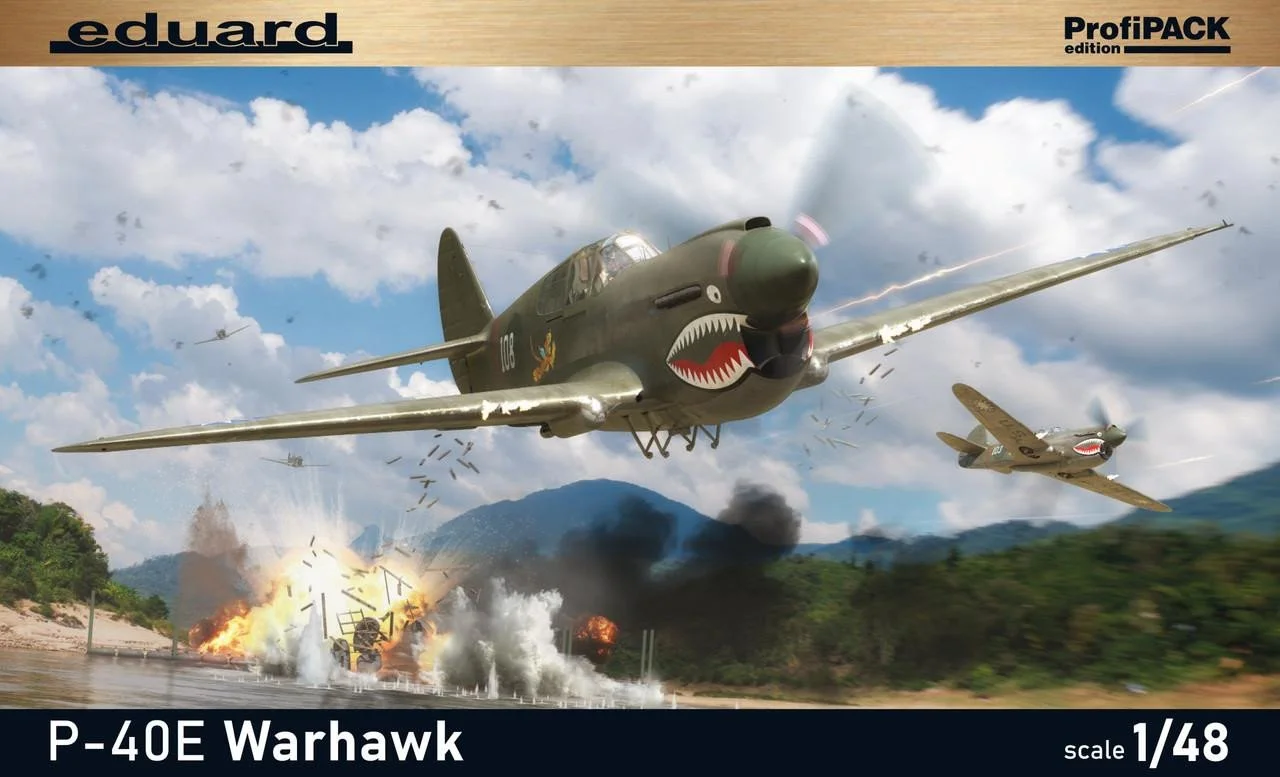
COL A : David L. Hill, 2nd FS, AVG, 14th AF, Kuomintang, China, May 1942
COL B : ET795, 1Lt. Clay Tice, Jr, 9th FS, 49th FG, Port Moresby, New Guinea, 1942
COL C : 11th FS, 343rd FG, Adak, Adak Island, 1942
COL D : ET600, Lt. Andrew J. Reynolds, 9th FS, 49th FG, Darwin, Australia, August 1942
COL E : AK772, Sqn. Ldr. Clive Caldwell, F/Sgt Henry G. Burney, No. 112 Squadron (RAF), LG152 Gambut, Libya, March-May 1942
COL F : NZ3097, F/O Aitken M. Davis, No. 15 Squadron RNZAF, Espiritu Santo, 1943
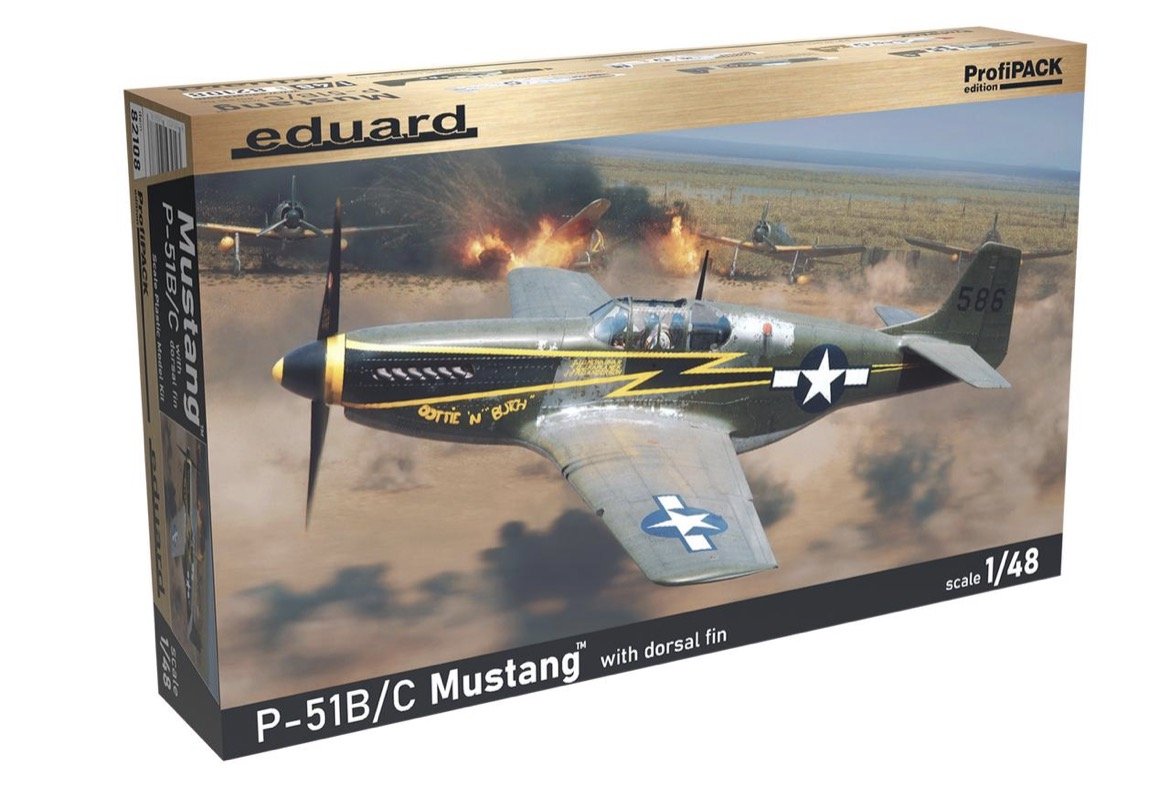
The ProfiPACK edition of the kit of the US WWII fighter aircraft P-51B/C Mustang in 1/48 scale.
The kit offers to build Mustang version B and C with dorsal fin in one of the five USAAF markings and one from the RAF.
Plastic parts: Eduard
Marking options: 6
Decals: Eduard
PE parts: pre-painted
Painting mask: yes
Resin parts: no
COL A. P-51B-1-NA, s/n 43-12375, Capt. Don M. Beerbower, 353rd FS, 354th FG, 9th AF, A-2 Cricqueville, France, June 1944.
COL B. P-51C-10-NT, s/n 43-25054, Lt. Robert M. Scott, 79th FS, 20th FG, 8th AF, Kings Cliffe, Northamptonshire, United Kingdom, November 1944.
COL C. Mustang Mk.III, s/n FZ111, F/L Mieczysław Gorzula, No. 309 (Polish) Squadron, RAF Andrews Field, United Kingdom, April-May 1945.
COL D. P-51B-15-NA, s/n 43-24877, Lt. Harold P. Kick, 325th FS, 318th FG, 15th AF, Lesina, Italy, November 1944.
COL E. P-51C-10 NT, s/n 44-11096, 26th FS, 51st FG, 14th AF, Kunming, China, 1944.
COL F. P-51C, Lt. G. J. Kaplanek and L. D. Monaghan, 118th TRS, 23rd FG, 14th AF, Chengkung, China, May 1945.
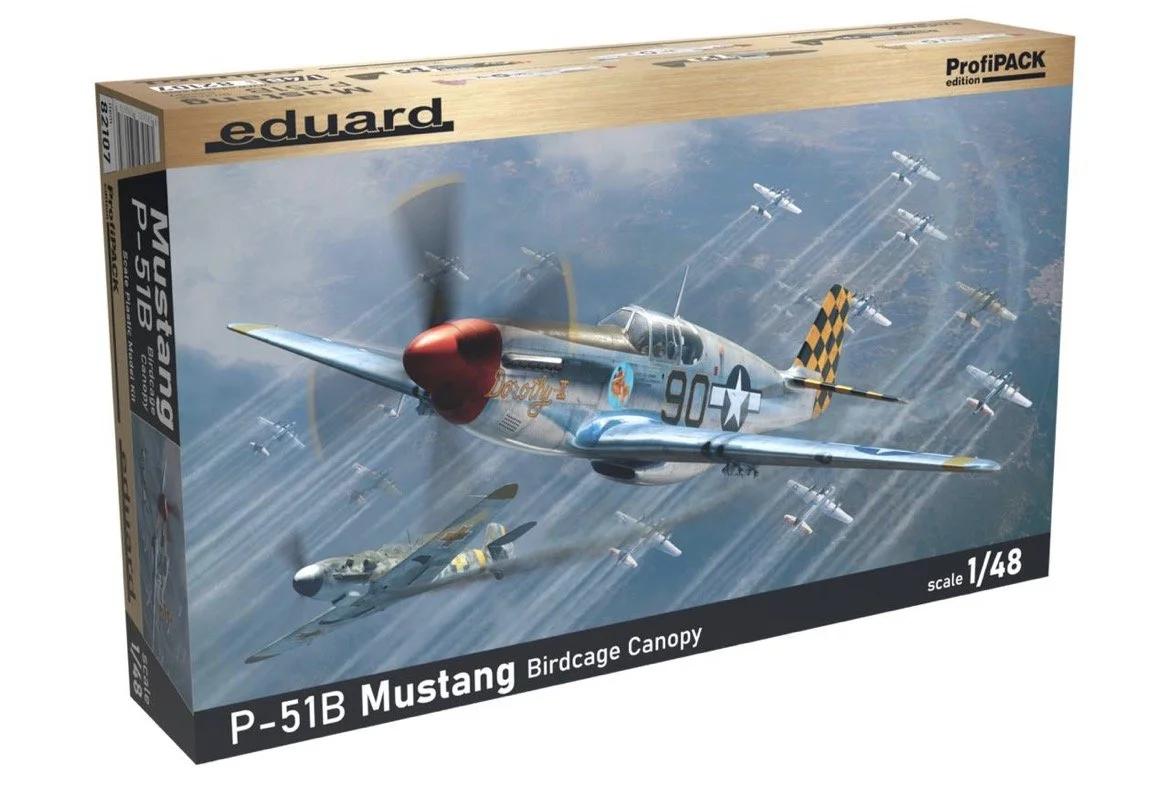
The ProfiPACK edition kit of US fighter aircraft P-51B Mustang in 1/48 scale. It allows to build the aircraft with standard Birdcage canopy in one of six USAAF markings.
plastic parts: Eduard
marking options: 6
decals: Eduard
PE parts: yes, pre-painted
painting mask: yes
resin parts: no
Includes decals for following planes:
P-51B-10-NA, s/n 42-106730, VF*P, “Reegies Reply”, Capt. John T. Godfrey, 336th FS, 4th FG, 8th AF, Debden, Great Britain, April 1944
P-51B-5-NA, s/n 43-6787, G4*Q, “Shanty Irish”, Capt. Gil O'Brien, 362nd FS, 357th FG, 8th AF, Leiston, Great Britain, June 1944
P-51B-5-NA, s/n 43-6461, CS*Q, “Hot Pants”, Lt. Richard Rabb, 370th FS, 359th FG, 8th AF, East Waltham, Great Britain, July 1944
P-51B-10-NA, s/n 42-106501, CM*M, “Betty Jane”, Col. Charles McCorckle, 31st FG, 15th AF, San Severo, Italy, July 1944
P-51B-15, s/n 43-24857, 90, “Dorothy II”, Capt Robert M. Barkey, 318th FS, 325th FG, 15thFS, Lesina, Italy, June 1944
P-51B-1, s/n 43-12405, 76th FS, 23rd FG, Col. D.L. “Tex” Hill, China, 1944
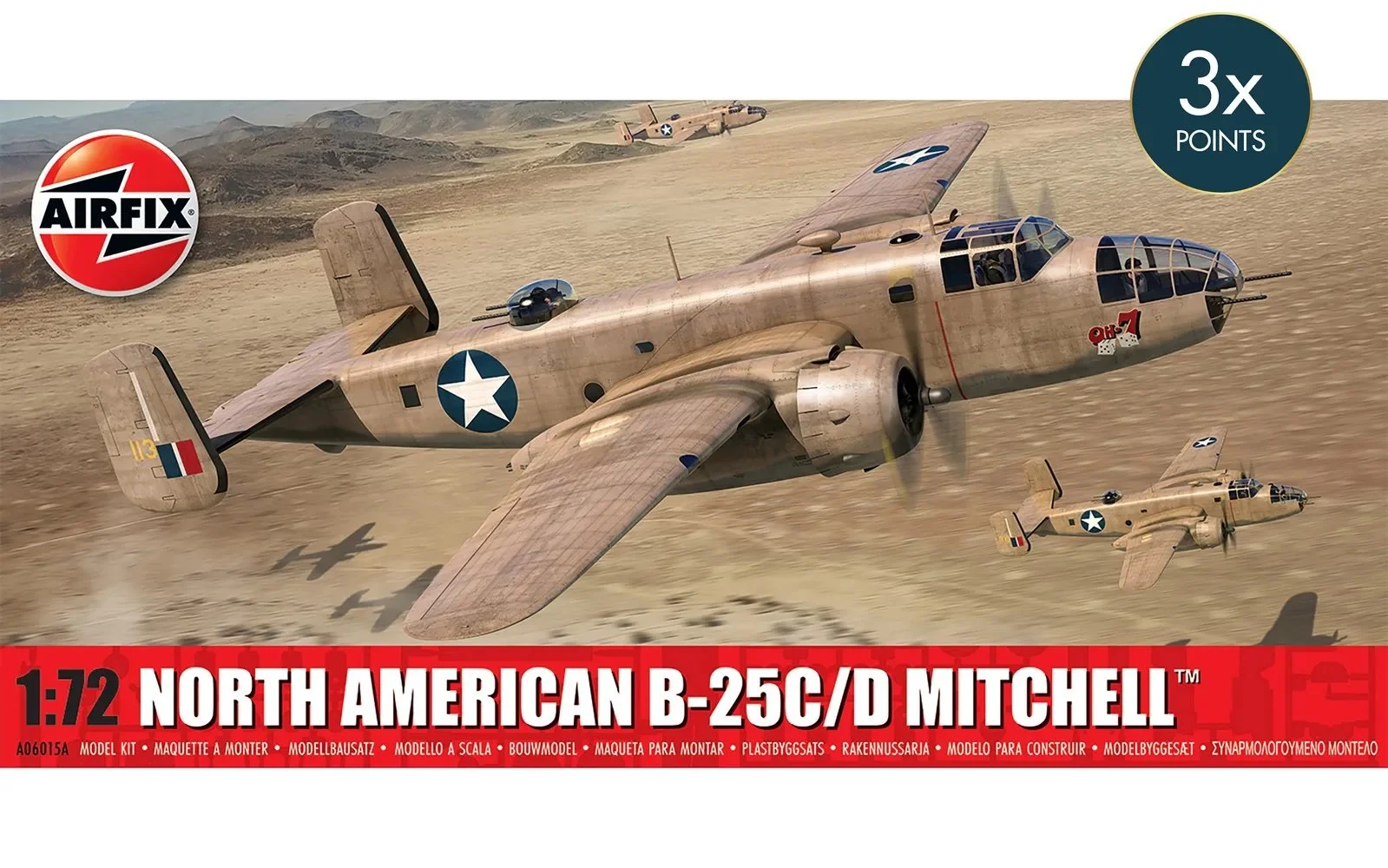
The role of medium bomber proved to be one of the most crucial during the Second World War and after something of a challenging service introduction, the North American B-25 Mitchell developed into a highly successful aircraft. Seeing service in every theatre of operation, the B-25 was the most versatile aircraft of its type, fulfilling a multitude of tactical roles in many different operating environments. Arguably, the most famous action involving the North American B-25 Mitchell came just after 8am on 18th April 1942, when sixteen of the bombers lifted off the relatively short deck of USS Hornet and set course for Japan. Intended as a strike at the heart of the Japanese Empire who had infamously attacked the US Pacific Fleet at Pearl Harbor, this audacious and heroic raid illustrated the resolve of the American people and the determination of their military forces to strive for victory.The early B-25B aircraft used on the Doolittle Raid performed well, but were already in the process of being upgraded. The later C/D model (different letters were used to denote the manufacturer) proved to be the definitive version of this extremely effective medium bomber and was the first truly mass produced version of the aircraft. An extremely rugged and versatile aircraft, the Mitchell saw service as an anti-submarine patrol aircraft off the coast of Florida and as a strike bomber in the deserts of North Africa, proving successful at both. Some of the later versions of the B-25 became the most heavily armed aircraft of the war, with no less than 18 machine guns and an array of other offensive weaponry. With a solid nose housing 8 heavy guns, these aircraft were lethal gunships, capable of destroying anything in its line of fire.
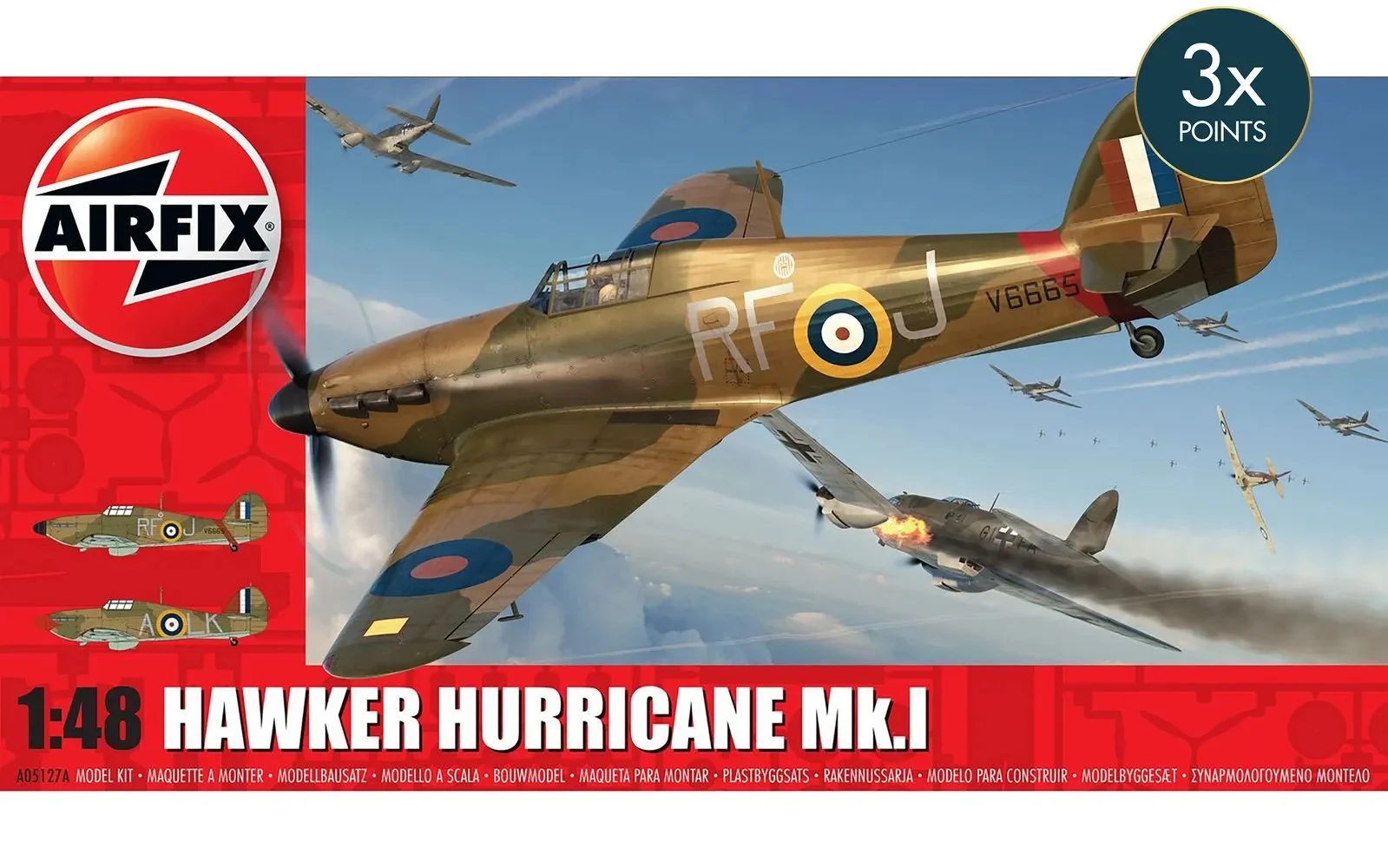
The Hawker Hurricane was the RAFs most vital fighter in the early years of WWII. These tough, partly fabric covered monoplane fighters put in a valiant defense against the numerically superior Luftwaffe during the Blitzkrieg. Although slower than the Messerschmitt Bf109, and with a less destructive armament, the Hurricane was able to turn tighter and absorb considerable punishment.
BAE SYSTEMS is a registered trade mark of BAE Systems plc.
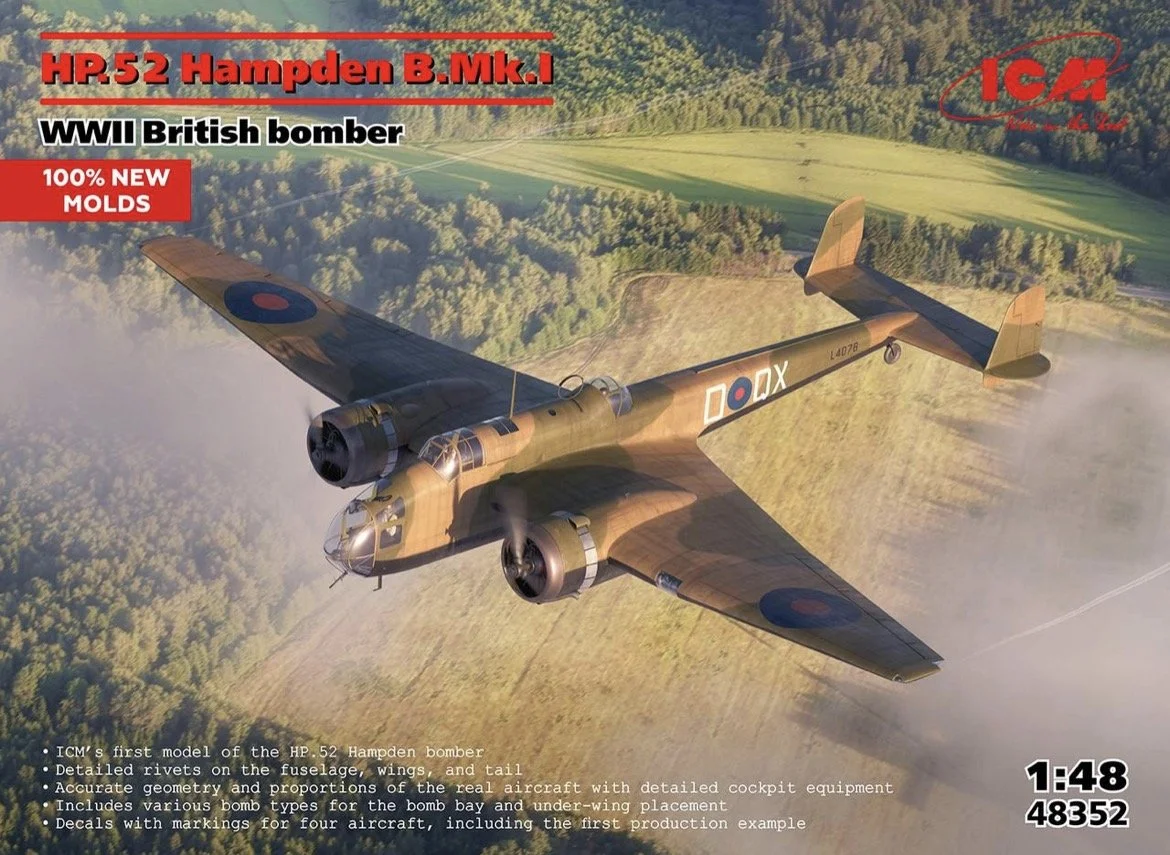
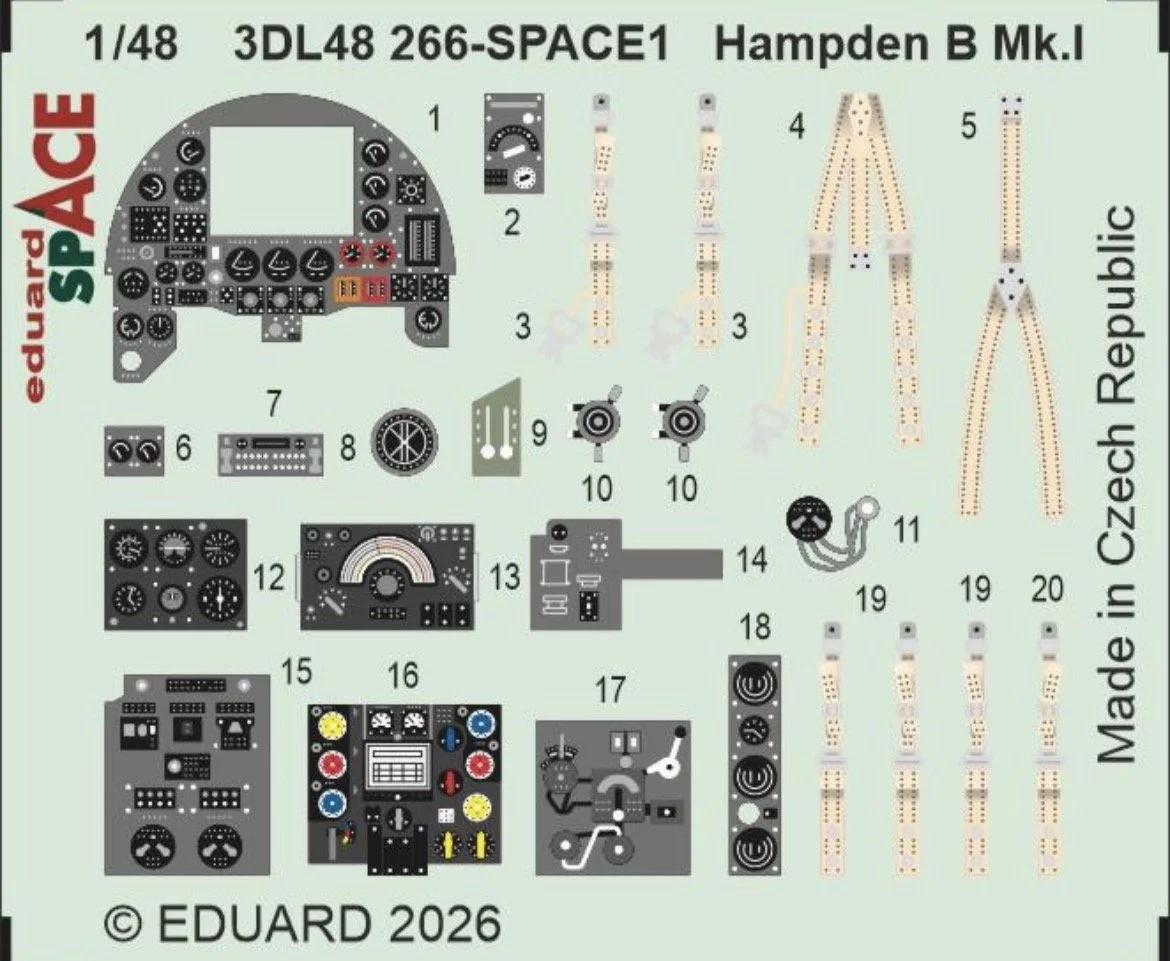
In October 1931, the British Air Ministry began preparing specifications for a new bomber to replace obsolete biplanes. Specification B.9/32 was created in August 1932, with several manufacturers competing. Handley Page’s HP.52 was selected, with its prototype completed in spring 1936. In June, it flew successfully, reaching 426 km/h and carrying over 1,800 kg of bombs. It was shown to King Edward VIII in July. On October 4, 1937, the Air Ministry approved the HP.52 Hampden B.Mk.I (named after 17th-century defender John Hampden).
Production began in spring 1938, with aircraft entering service by autumn. By July 1940, Handley Page produced 500 units. English Electric joined production in February 1940, building 770 more by March 1942. Canadian production followed. From the start of WWII, the HP.52 Hampden was actively used against Germany, conducting ground attacks, bombing raids, ship attacks, and mine-laying. It served with Bomber Command until autumn 1942, then transferred to Coastal Command from spring 1942, where many became torpedo bombers.
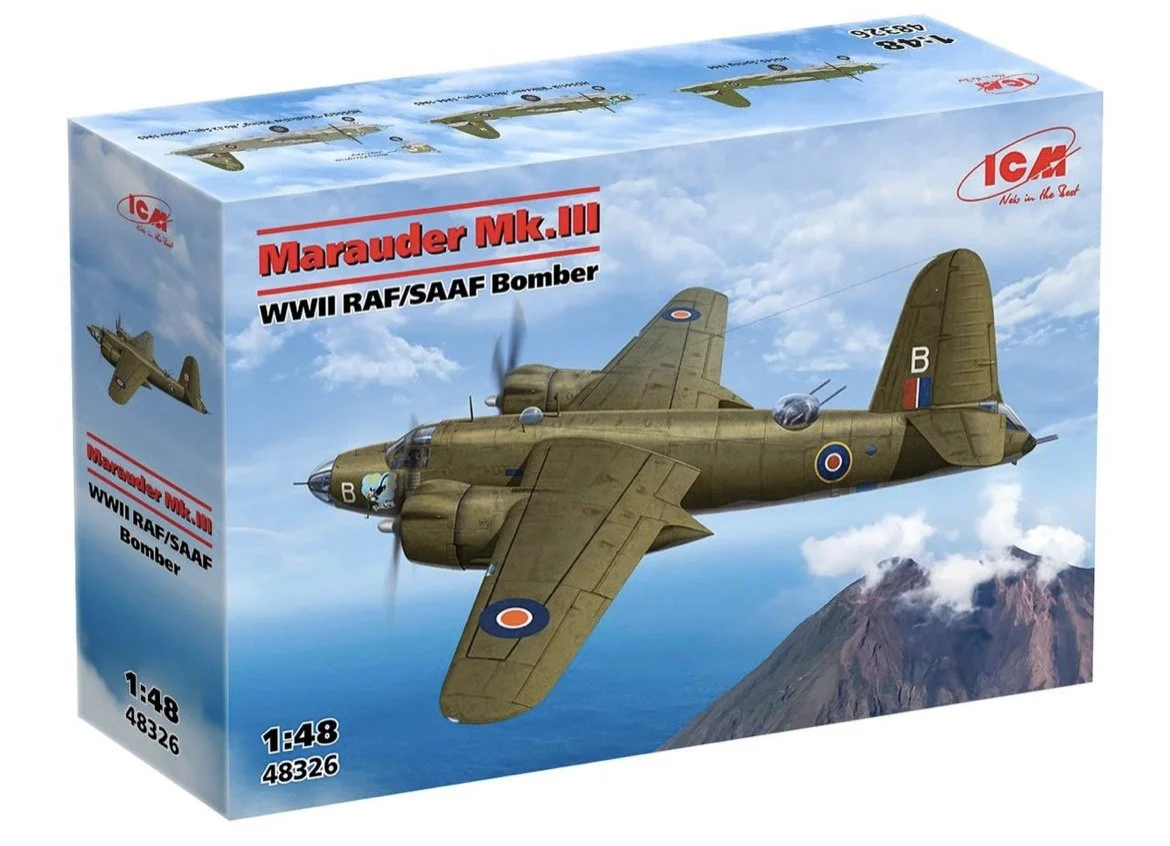
The American factory in Middle River, which built B-26 Marauders, produced 200 bombers for British military aviation that were delivered to the RAF and SAAF. These aircraft, designated Marauder Mk.III with serial numbers HD402 through HD601, were based on the B-26F Marauder model. The B-26F featured significant wing modifications compared to earlier versions, along with a new ventilation mast for fuel tank air access and redesigned nose glazing.
The Marauder Mk.III had only minor differences from the B-26F. All Mk.IIIs featured spoked nose wheel landing gear, whereas B-26Fs typically used solid wheel discs. The tail gun position was also modified—the plexiglass covering near the machine guns was replaced with canvas. Some sources indicate that Marauder Mk.IIIs were equipped with British-designed bomb sights.
These aircraft served in the RAF’s 14th and 39th squadrons as well as in the South African Air Force’s 12th, 21st, 24th, 25th, and 30th squadrons. As part of the SAAF, they provided support during the Allied landing in Italy.
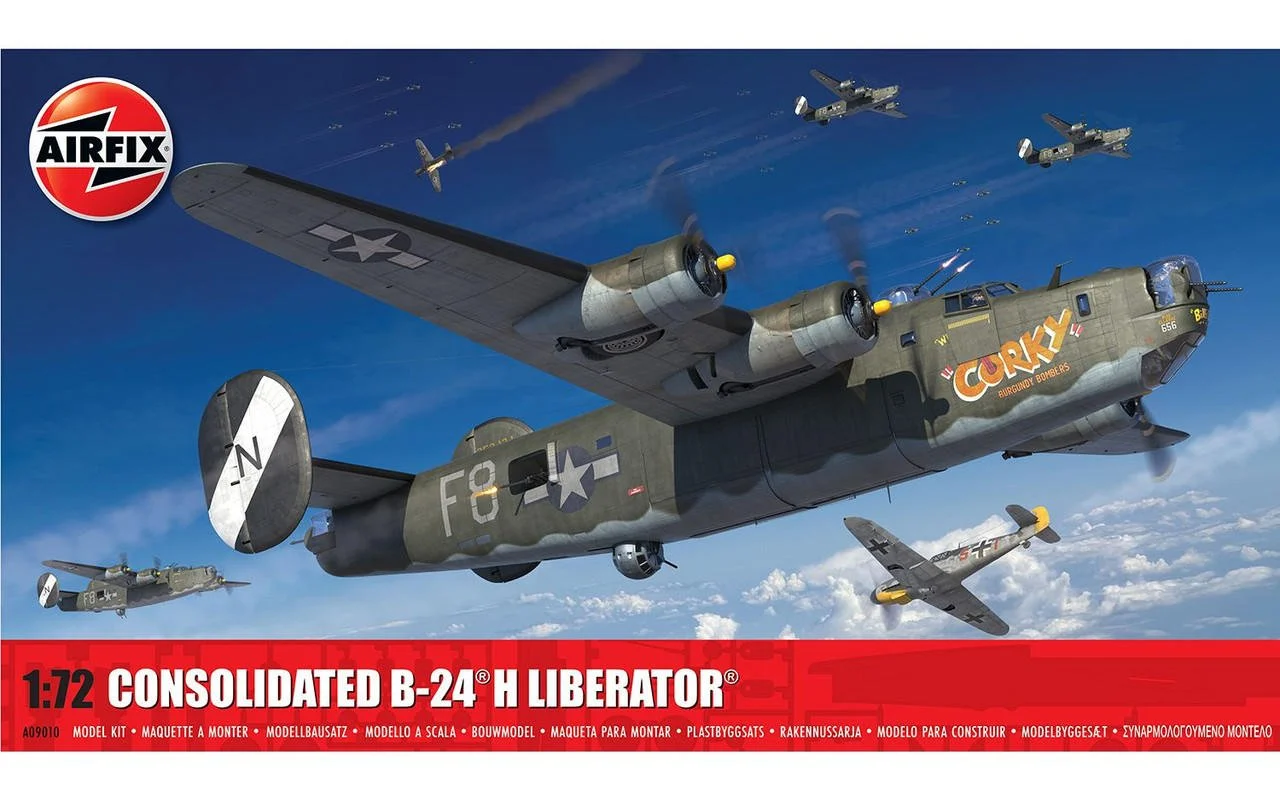
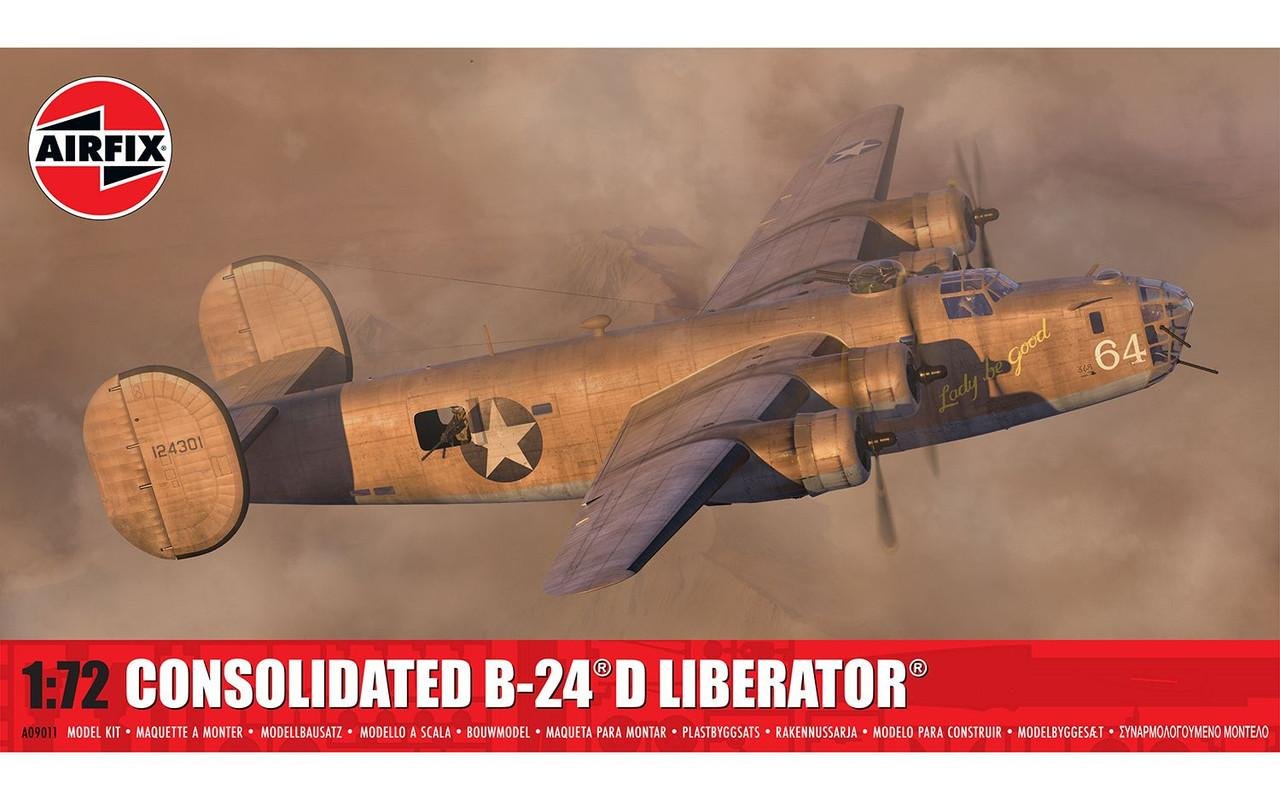
The second of America's great four-engined heavy bombers of the Second World War, the Consolidated B-24 Liberator actually began development after the Army Air Corps approached the company to build B-17 Flying Fortresses. Unimpressed at the prospect, Consolidated proposed that they could design and produce their own bomber in the same time it would take them to establish production lines, and it would be better than a Flying Fortress. When their XB-24 prototype took to the air on 29th December 1939, it was a very different-looking airplane to the B-17 Flying Fortress, with its shoulder-mounted thin wings, deep, yet narrow fuselage and twin-boom tail, it had a maritime aircraft appearance about it. Following its eventual USAAF introduction in 1941, the B-24 Liberator was produced in vast quantities, serving in every theatre during Second World War, and making a vital contribution to the Allied War effort.
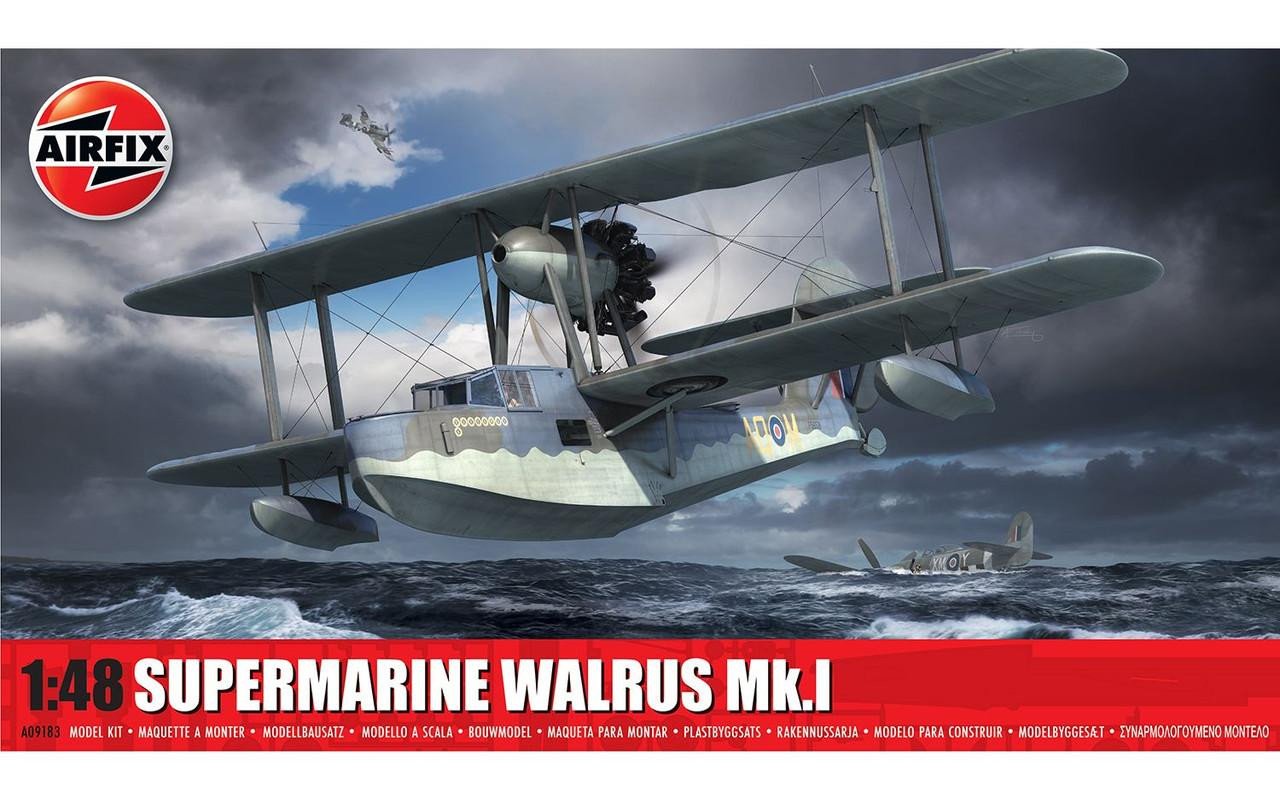
The Supermarine Walrus Mk I is a British single-engine amphibious biplane reconnaissance aircraft featuring a metal hull, a pusher engine configuration, and a crew of three. Designed by R.J. Mitchell, it was widely used during World War II for fleet spotting, anti-submarine patrols, and air-sea rescue operations.
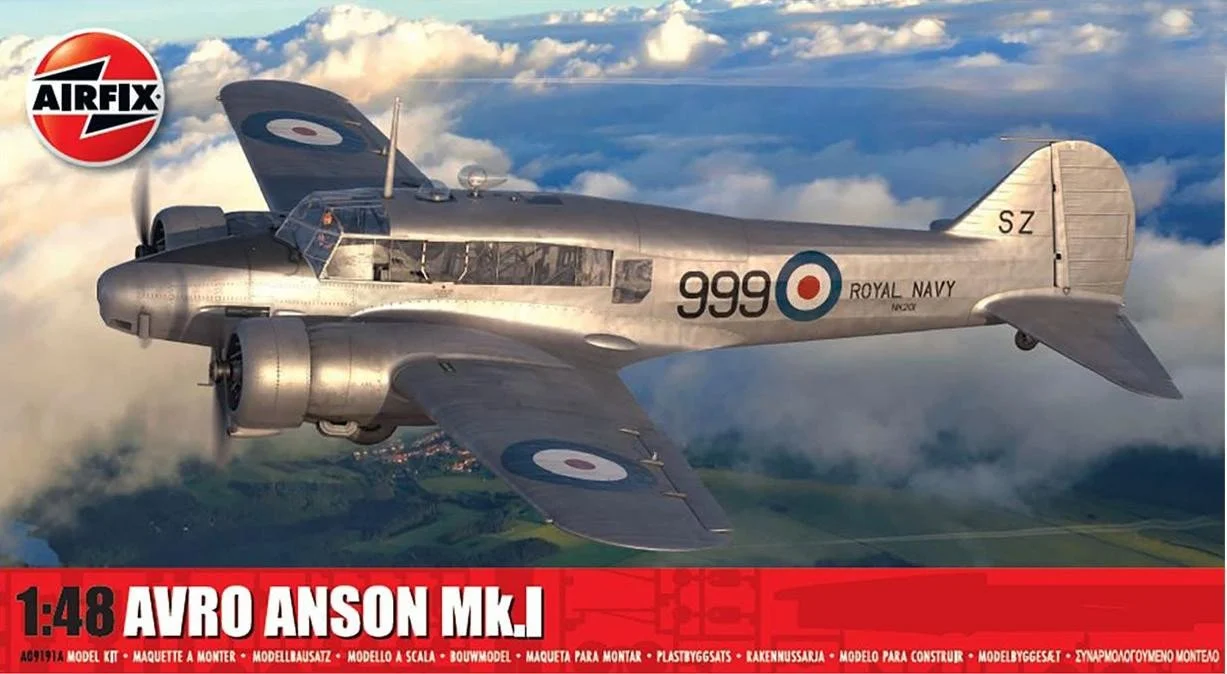
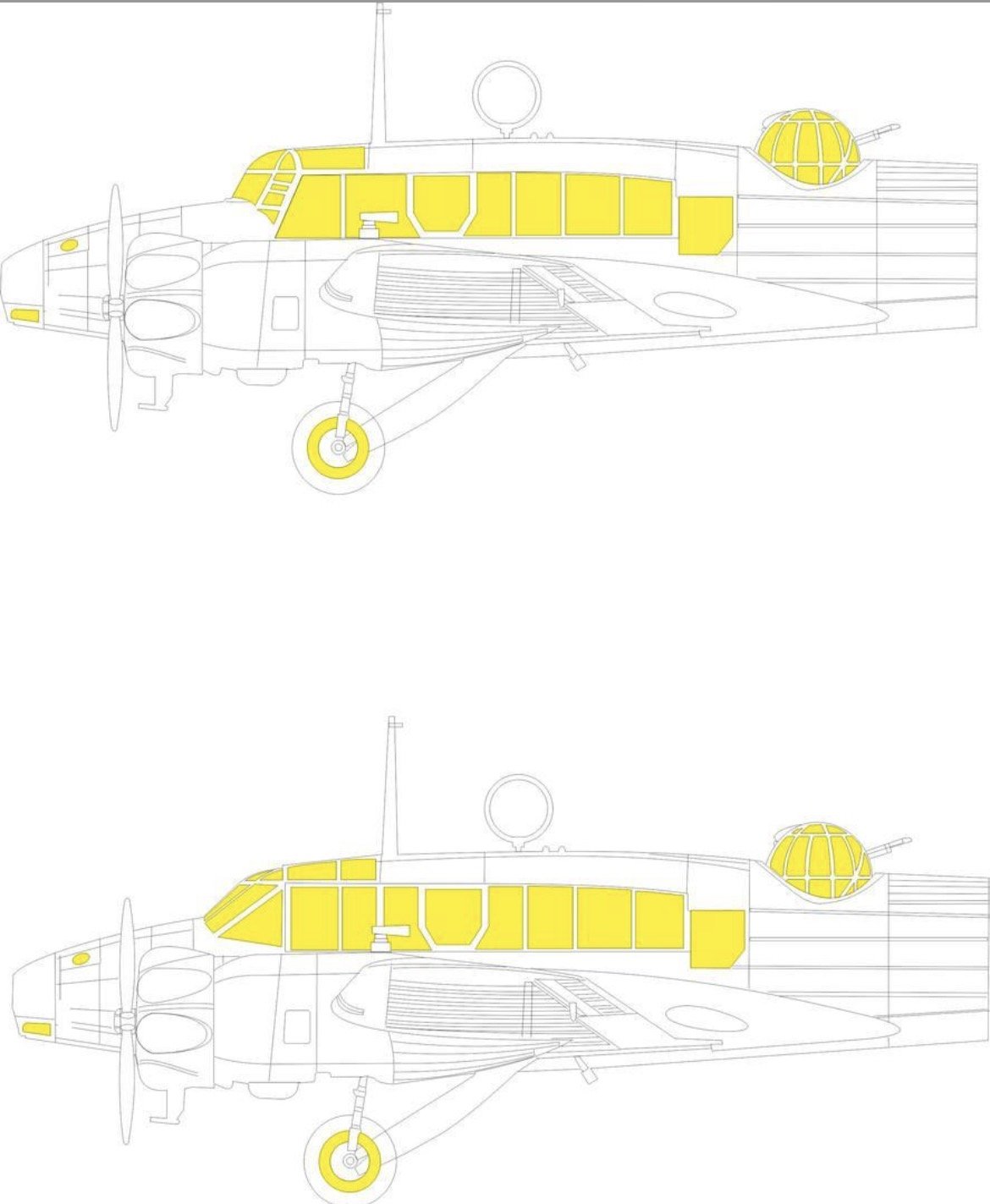
When it entered service with No.48 Squadron at RAF Manston in March 1936, the Avro Anson became the first monoplane type to achieve squadron service status and was also the first RAF aircraft to feature a retractable undercarriage. The RAF Anson Mk.I was equipped with a fixed forward firing .303 machine gun operated by the pilot and a single Lewis gun mounted in the manually traversed dorsal turret. It could also be equipped with a modest bomb load, something which was required by submarine hunting aircraft operated by Coastal Command. Despite the fact that the RAF entered the Second World War with 26 squadrons equipped with Avro Ansons, they were basically obsolete as a fighting machine and were quickly withdrawn to secondary training roles, a task for which the ‘Faithfull Annie’ was particularly well suited. As part of the Empire Air Training Scheme, many thousands of aircrew destined for service with Bomber Command were trained both in the UK and overseas.
Although not generally regarded as one of the most fashionable British aircraft to see service during the Second World War, the Avro Anson was nevertheless one of the most important aircraft not only of the inter-war years, but also during WWII itself and is deserving of more recognition than it usually receives. An aircraft which began its development in 1933 as a high speed, long range, modern mail carrying charter aircraft, the Avro 652 was still in development when the British Air Ministry issued a requirement for a twin engined, general reconnaissance and multi-role aircraft capable of performing a variety of roles for both the Royal Air force and the Royal Navy.
The Avro team felt that their new aircraft would be perfect for the role and later entered it in an official evaluation program with the competitor de Havilland DH89M, the military version of their biplane Dragon Rapide. The Avro design was found to possess greater range and endurance and whilst not without a few areas which would require some design modifications, an initial order for 174 militarized aircraft was placed. The Avro 652 would be given the name Anson after an Eighteenth Century British Admiral of the fleet, a development which did not please everyone at the Air Ministry, but as the aircraft was intended to undertake maritime patrols, the name did seem rather appropriate.
Highlighting the importance of the Avro Anson as a British aircraft type, when it entered service with No.48 Squadron at RAF Manston in March 1936, it became the first monoplane type to achieve squadron service status, but was also the first RAF aircraft to feature a retractable undercarriage. At this time, the advanced Anson quickly began to attract attention from several other countries and in order to capitalize on this interest, some aircraft were diverted from existing RAF orders to fulfil these requirements, with full production forcing Avro to open new manufacturing facilities in the North West of England. The RAF Anson Mk.I was equipped with a fixed forward firing .303 machine gun operated by the pilot and a single Lewis gun mounted in the manually traversed dorsal turret. It could also be equipped with a modest bomb load, something which was required by submarine hunting aircraft operated by Coastal Command and whilst there were no reports of an Anson sinking a U-Boat, their presence would keep these feared hunters submerged.
During the Dunkirk evacuations, Ansons used to cover the operation came under attack by Messerschmitt Bf 109 fighters, which had real difficulty engaging the slow flying British aircraft. Consistently overshooting the Ansons, they came in the sights of the aircraft's forward firing gun and astonishingly, two of the Luftwaffe fighters were shot down and a third was badly damaged, with all the Ansons escaping from the engagement unscathed. Despite the fact that the RAF entered the Second World War with 26 squadrons equipped with Avro Ansons, they were basically obsolete as a fighting machine and particularly for the ones assigned to Bomber Command, they were quickly withdrawn to secondary training roles, a task for which the 'Faithfull Annie' was particularly well suited. As part of the Empire Air Training Scheme, many thousands of aircrew destined for service with Bomber Command were trained both in the UK and overseas, including those destined to serve in the Avro Lancaster, the mighty bomber which was produced in some of the same factories previously used to produce Ansons.
With just under 11,000 Ansons eventually produced, the final RAF example was only withdrawn from service as a station communications aircraft in 1968.
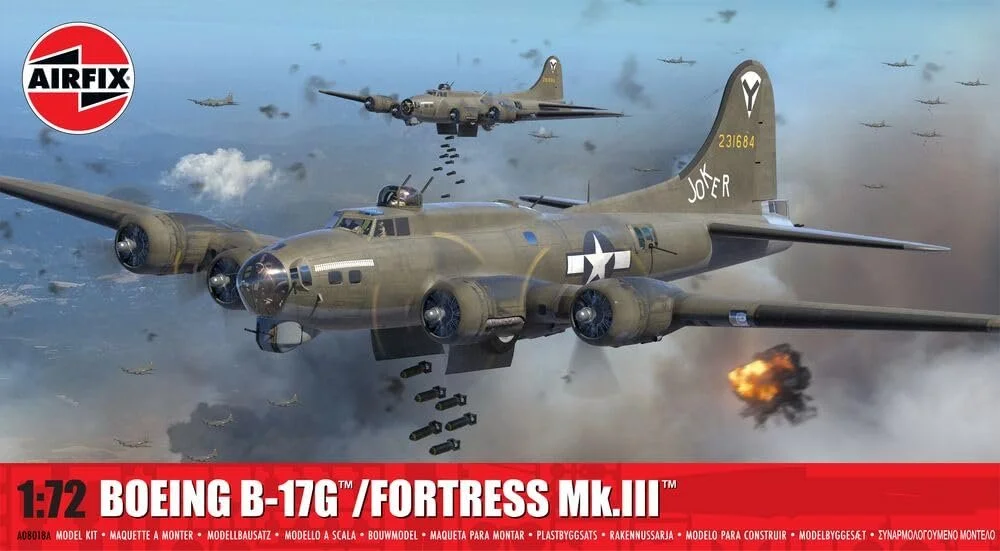
The Boeing B-17 ‘Flying Fortress’ boasts a remarkable legacy, as both a strategic weapon and an enduring symbol of American air power during the Second World War. Designed as a large, multi-engine bomber with substantial defensive armament, the B-17 was introduced in 1938. First used in combat with the RAF in 1941, carrying out bombing raids in France, its poor performance suggested that improved defences and greater bombing accuracy were needed. Later variants like the B-17G were more effective and gradually became potent strategic weapons, capable of carrying out high-altitude, long-range attacks. Despite heavy defensive armament B-17s still suffered at the hands of enemy fighters.
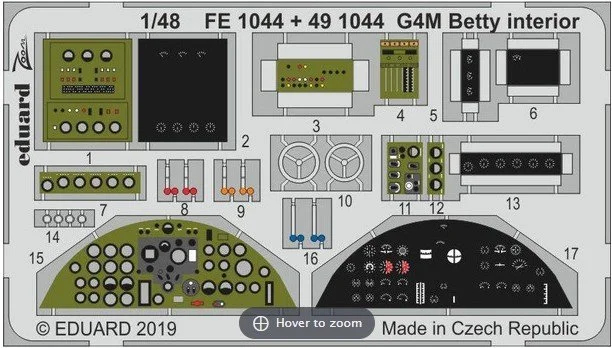
Description
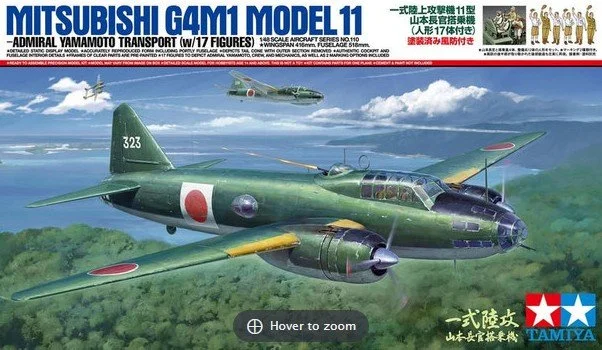
The Mitsubishi G4M1 Model 11 was officially adapted in 1941 as the successor to the Type 96 bomber. Featuring a long flight range which enabled it to attack enemy fleets from land bases, it went on to serve as the IJN's main land-based bomber in the Solomon Islands in 1942. Most of the G4M1s during the Solomon Island campaign had their outer tail cones removed to provide a better field of fire for the tail-mounted 20mm cannon.
★1/48 scale plastic assembly kit of the Mitsubishi G4M1 Model 11. Length: 416mm, Wingspan: 518mm. ★The tubular form of the G4M1 has been accurately reproduced. ★Realistically reproduced tail cone with outer section removed. ★Cockpit details, including instrument panel, gun sight, floor panel, and bulkhead, feature realistic details. ★Canopy above the left side pilot seat, dorsal turret, and the aircraft's flaps can be depicted in either up or down position. ★In addition to clear canopy parts, pre-painted canopy parts are also conveniently included. ★Kit contains a total of 17 figures: 1 depicting Admiral Yamamoto, 1 observer, 2 pilots, 1 gunner, and 12 mechanics. ★2 kinds of decals included to depict Admiral Yamamoto's and Vice Admiral Ugaki's transports respectively.
Protector of the Convoys
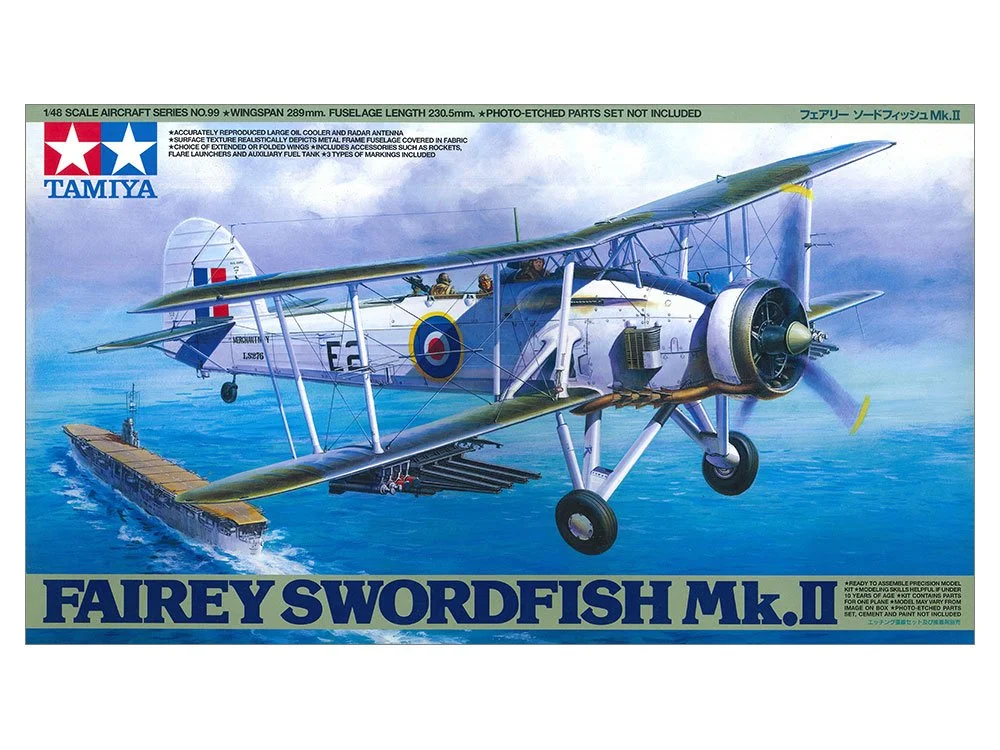
Famous for such feats as the night attack on the Italian fleet at Taranto and damaging the German battleship Bismarck, the British Royal Navy's Swordfish torpedo plane was assigned to the less glamorous, but still vital role of anti-submarine hunter from the latter half of WWII. The Mk.II variant entered service in 1943 with a more powerful engine and metal lower wings which allowed it to carry and fire a formidable payload of rockets. Flying from the decks of MAC ships and escort carriers, the Swordfish Mk.II sank 20 U-boats by war's end and helped protect the vital Atlantic supply convoys.
About the Model
★1/48 scale assembly kit of the Fairey Swordfish Mk.II anti-submarine variant. ★Length: 230.5mm, Width: 289mm ★Distinguishing features such as metal lower wings, large oil cooler, and radar antenna array all accurately reproduced. ★Realistic surface texture recreates fabric covering on metal frame structure. ★Main wings can be modelled in the folded position. ★Ultra-detailed cockpit interior. ★Includes such accessories as anti-ship rockets, smoke floats, and extra fuel tank. ★Includes three crew figures and 3 types of markings. ★Use with Item 61069 Fairey Swordfish Photo-Etched Bracing Wire Set for an extra level of detail.
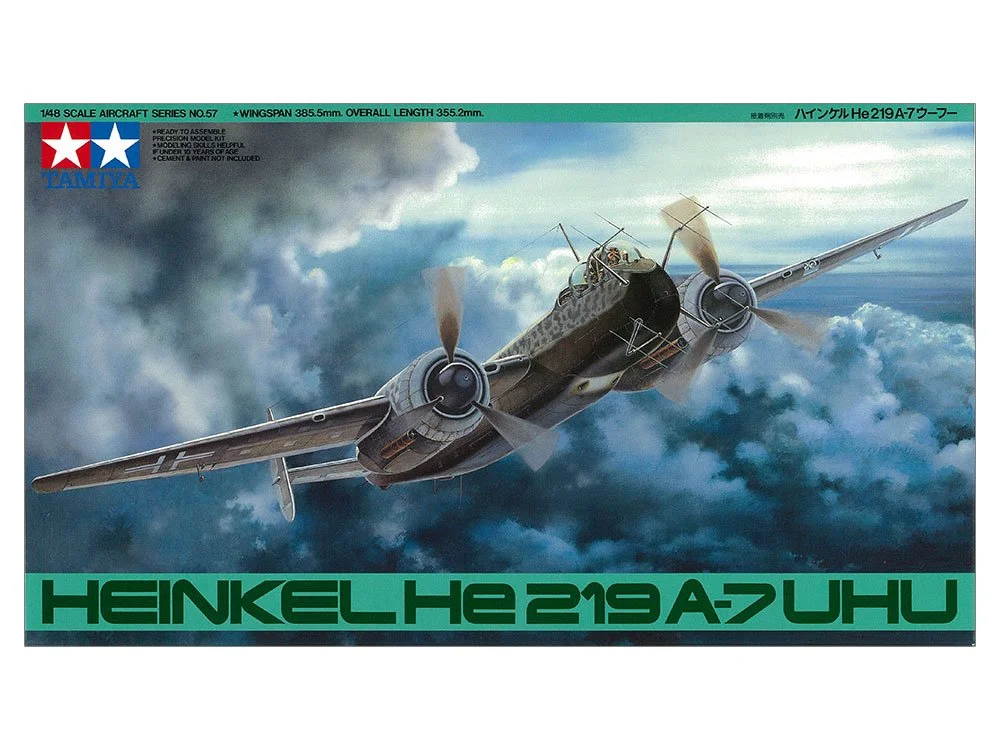
The He 219 was arguably the Luftwaffe's best nightfighter during WWII and was notable for an extraordinary debut mission in June 1943 when a prototype shot down five RAF Lancaster bombers. This kit depicts the final production variant, the A-7, which was equipped with DB 603G engines for improved high-altitude performance. Only 268 were manufactured, but they were an important element of the Luftwaffe, taking on RAF rivals such as the Mosquito in defensive night fighter roles.
About the Model
This is a 1/48 scale plastic model assembly kit. Length: 355.2mm, wingspan: 385.5mm. ★The He 219 design with slimline fuselage and long wing are captured in style. ★Choose up or down main wing flaps. ★The radar antenna post is molded together with armor plate, making for a detailed and secure end result. ★A realistic cockpit interior has depictions of instrumentation, sights and ejection seat. ★A die-cast metal cockpit floor balances the model. ★Fuselage rear machine gun is recreated. ★Choose whether to assemble with open or closed engine nacelles. ★Comes with 2 figures and 3 marking options.
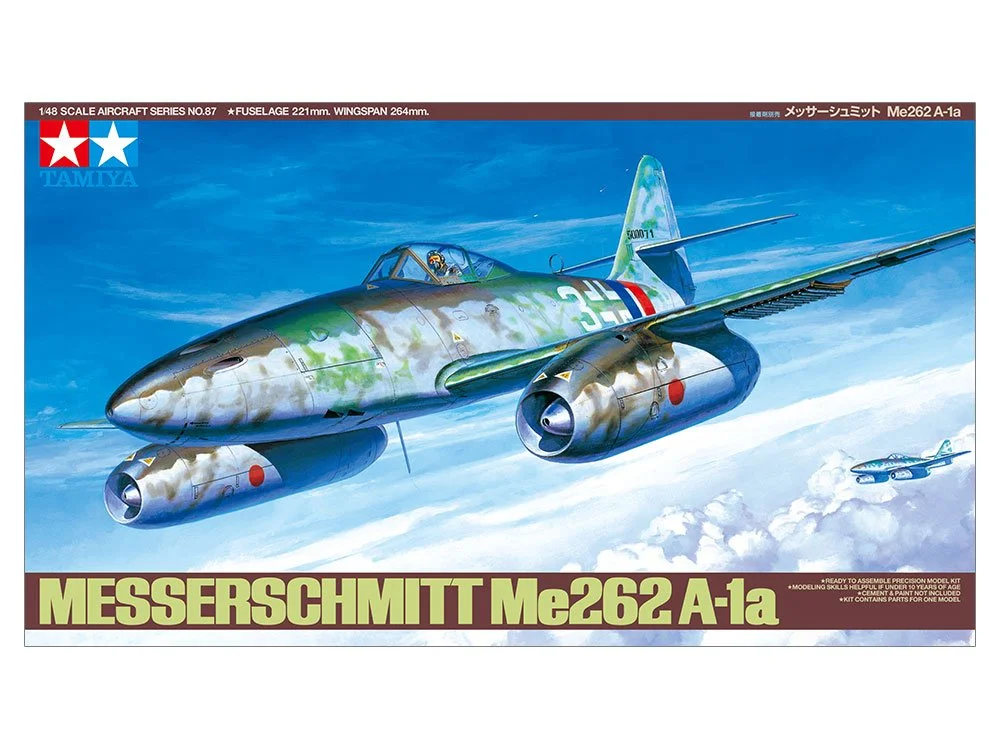
About the Messerschmitt Me262 A-1a
The revolutionary Messerschmitt Me262 was the first jet powered plane to see service. The construction of pre-production aircraft designated Me262 A-0 started in April 1944 but the fighter production version that should have been the first version to be mass-produced was delayed because of Hitler's strict contrary orders prioritizing the deployment of fighter/bomber A-2a version. Then, in November 1944, the Me262 A-1a fighter version was finally put into production. It was equipped with four 30mm cannons in the nose to counter Allied bombers and escorting fighters. Late production planes were equipped with hooks under the nose to mount rocket launchers and with 24 R4M air-to-air rocket under the wings making the Me262 the most feared German fighter by Allied pilots.
About the Model
★Tamiya presents the plastic assembly kit of the Messerschmitt Me262 that was used by the Luftwaffe during the closing days of WWII. ★1/48 scale. Fuselage length: 221mm, wingspan: 264mm. The unique form of the Me262 with its engine nacelles under each wing has been accurately replicated. ★The 30mm cannon mounted in the nose and cockpit have been reproduced down to the finest details. Canopy and gun bay access panels can be mounted in either open or closed position. ★R4M air-to-air rockets with launchers to be mounted under the wings and W.Gr 21 air-to-air rocket-launchers to be assembled under the nose are part of the kit. ★Nose wheel well comes as a die-cast weight. ★A pilot figure and decals for 4 different markings are included in the kit.
This cost-effective model kit set includes Item 61117 (1/48 Messerschmitt Bf109 G-6) and 32501 (1/48 German Kübelwagen Type 82) with a special package and painting guide. The Messerschmitt Bf109 was the German Air Force’s main aircraft during WWII, and among its variants, the G-6 featured heavy armor with the dual 13mm gun (changed from dual 7.92mm guns) and 20mm cannon gondolas. The Kübelwagen Type 82 was developed based on the Volkswagen “Beetle”, and featured simple, lightweight structure with reliable air-cooled engine and 4-wheel independent suspension. During WWII, this vehicle was in service for German forces.
About the Messerschmitt Bf109 G-6
• 1/48 scale plastic model assembly kit. Fuselage length: 188mm, wingspan: 207mm.
• Distinctive bulges on either side of the cockpit cowling known as "Beule” is authentically captured based on in-depth research of the actual aircraft.
• Recreation of the DB605 engine.
• Magnet-attached engine cowling components are removable.
• Choose from 2 different types of air intake - standard and with dust filter.
• Poly cap allows detachment and attachment of drop tank.
• The second canopy can be depicted open or closed. Main and radiator flaps can be depicted up or down.
• Separate parts are included to recreate wing underside 20mm cannon gondolas.
• Comes with one pilot figure and three marking options, plus canopy masking stickers.
About the Kübelwagen Type 82
• 1/48 scale plastic model assembly kit. Length: 79mm.
• Comes with two figures recreated in standing position and four marking options.
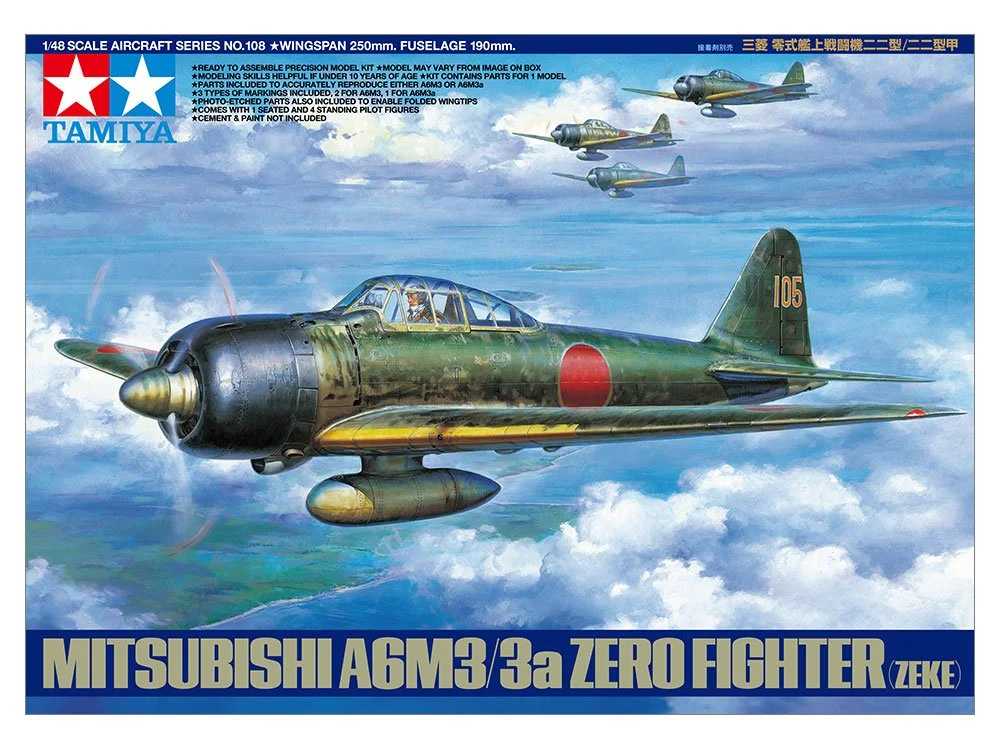
Japan's Mainstay in the Solomons
Following the Zero Model 21 (A6M2), which achieved overwhelming victories against Allied forces in the first half of Pacific War, the summer 1942 saw the introduction of the Model 32 (A6M3) which was powered by a Sakae 21 engine and an 11m wingspan with clipped wingtips. Although top speed increased, its range reduced drastically, therefore the Model 22 (A6M3) was rushed into development in order to correct the Model 32's shortcomings. Overall performance improved as the 12m wingspan and folding wingtips were reintroduced to regain maneuverability and new wing fuel tanks restored range to 2,560km. The Model 22 (A6M3a) which was fitted with long-barreled cannons was also put into production. Deployed mainly to the Solomon Islands from early 1943, Zeroes had fierce battles against U.S. fighters.
About the Model
★1/48 scale plastic assembly model kit of the Mitsubishi A6M3 Model 22 Zero. ★Length: 190mm, wingspan: 250mm ★Well-balanced form of the aircraft has been beautifully reproduced. ★Photo-etched parts depict the folded wingtip mechanism. ★The A6M3a which was armed with long-barreled cannons can also be assembled. ★You can choose to assemble the cowl flap in either open or closed position. Also, flaps can be depicted in either up or down positions. ★One seated and four standing pilot figures included. ★Comes with three kinds of markings including one to depict the aircraft from the 251st Naval Air Group.
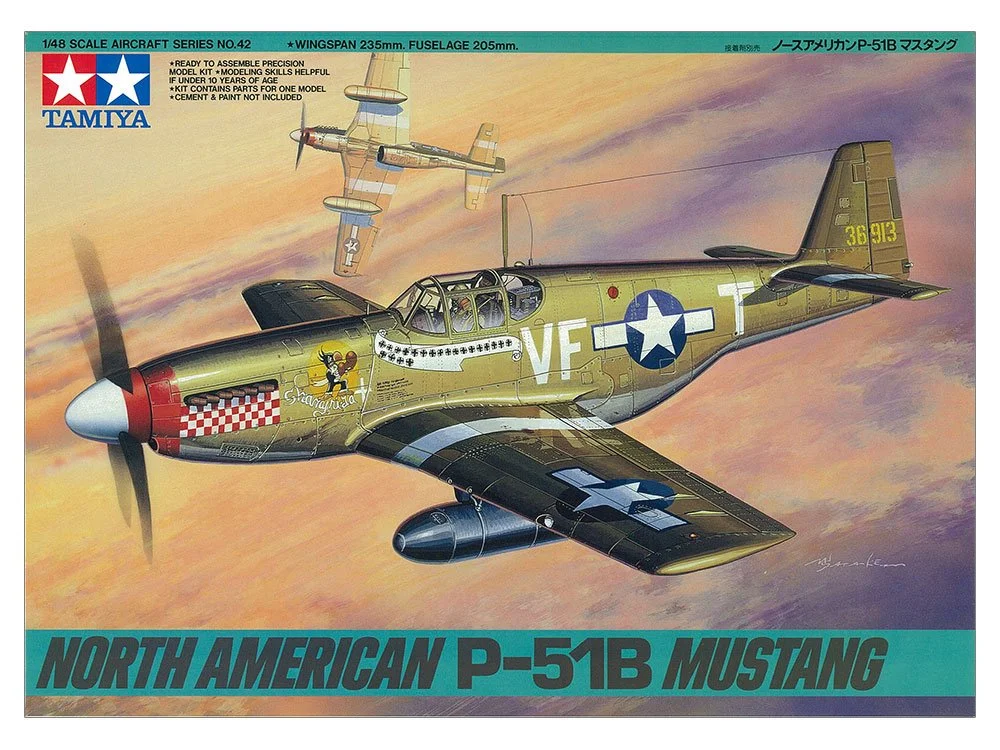
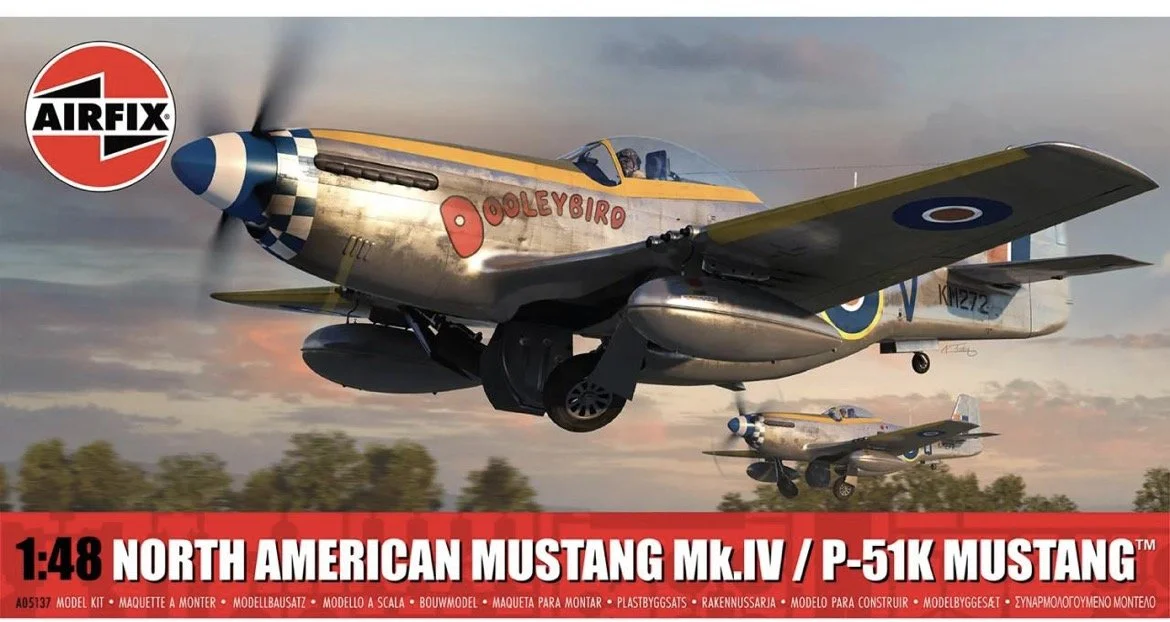
This kit depicts the B-variant of the legendary P-51 Mustang, which differed from the later P-51D in several important ways, including the "Razorback"-style fuselage. Parts are included for two 500lb bombs, two drop tanks, and one pilot figure. Three marking options are also included.
This cost-effective set includes Item 61119 1/48 Supermarine Spitfire Mk.I and Item 32562 1/48 British Light Utility Car 10HP in a special package. The iconic Spitfire fighter was one of the backbones of the RAF in the desperate struggle for the skies during WWII, and the Mk.I had a vital role to play in the Battle of Britain in 1940. The Light Utility Car 10HP was one of the several types of British pick-up trucks developed during WWII, and active in many duties.
Supermarine Spitfire Mk.I
• 1/48 scale plastic model assembly kit. Fuselage length: 191mm, wingspan: 235mm.
• A wide selection of photo-etched parts is included to depict sight, seatbelt parts, radiator mesh and more.
• Includes one seated pilot figure and three marking options.
• Comes with decals, masking stickers for clear parts, and molded stickers.
British Small Staff Car 10HP
• 1/48 plastic assembly kit model. Length: 84mm.
• Display your model with either an open or closed cargo cover.
• Comes with decals to depict a variety of marking options including a Royal Air Force (RAF) vehicle and one driver figure.
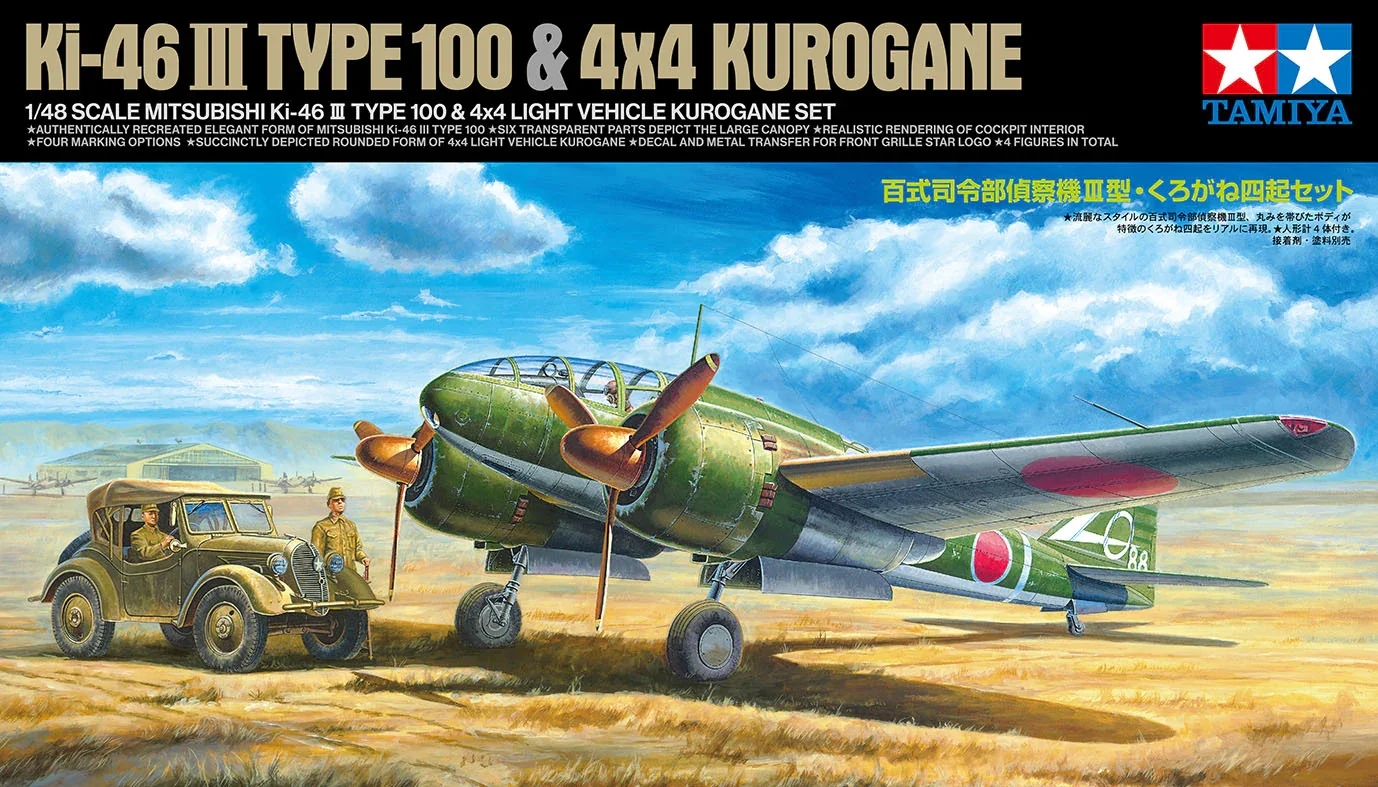
This model kit combo is a cost-effective set which includes Item 61092 1/48 Mitsubishi Ki-46 III Type 100 Command Recon Plane (Dinah) and Item 32558 1/48 Japanese 4x4 Light Vehicle Type 95 Kurogane in a special package.
During the Pacific War, the Mitsubishi Ki-46 III Type 100 was used as a strategic reconnaissance aircraft by the Japanese Army. This aircraft was powered by two 1,300 hp Ha-112-II Kinsei-Kai engines and was capable of a maximum speed of 630km/h. From the request of the Japanese army, the world's first light weight 4x4 vehicles were developed and named "Kurogane". Around 4,800 units were produced and were used for reconnaissance and communication in China, Southeast Asia, and the Pacific.
About Item 61092
• 1/48 scale plastic model assembly kit. Length: 229mm, wingspan:306mm.
• Six clear parts realistically depict the large canopy.
• Features authentic renderings of the cockpit interior such as seats, instrument panel and transceiver.
• Includes two full body figures (pilot and navigator) and four marking options.
About Item 32558
• 1/48 scale plastic model assembly kit. Length: 75mm.
• Choose from an open or closed hood.
• Metal transfer and decal recreate the star mark on the front grille.
• Includes two full body figures (standing officer and driver).
No results found
No results match your search. Try removing a few filters.